Cricket Duel
Bowl it, then swing on time. Most runs in two overs wins. 2 overs each.
Cricket Duel is a two-player cricket game in which one player bowls by dragging to set line and pace while the other taps to swing as the ball arrives. Each side bats two overs, and the higher score wins.
One of you drags to bowl, the other taps SWING as the ball arrives. Bowl fast and the timing window shrinks but your line can wander; bowl slow and it's an easy six. Every ball is a small duel of nerve.
Also known as 2 player cricket, Cricket game, Super over cricket.

- How you hold it
- Face-off
- Match
- 2 overs each
- Length
- About 2 minutes
- Play
- Friend or bot
How to play Cricket Duel: quick rules
About 2 minutes, a little longer with a super over. Full rules, options and bot levels are further down.
- 1One of you bowls and one bats, two overs each.
- 2Bowler: drag to pick line and pace, then let go.
- 3Batter: tap SWING as the ball reaches the bat.
- 4Perfect timing is a six, a miss on the stumps is out.
- 5Beat the target to win; a tie goes to a super over.
Cricket Duel rules
Innings and roles
- One player bats and the other bowls. Each innings is two overs of six balls, and the roles swap for the second innings.
- Who bats first is picked at random for a new match. On a rematch the player who lost bats first, and in a tournament it alternates, with Red first in game one.
- An innings ends after 12 balls or 3 wickets. The second innings is a chase: the target is the first innings' runs plus one, and the match ends the moment it's reached.
- A 3, 2, 1 countdown comes before each over, not each ball. Between innings a short card shows the score, the target and the new roles.
Bowling
- Touch your half and drag: sideways sets the line, further toward the batter sets the pace. Let go to bowl.
- You have about two and a half seconds to aim. If time runs out, the ball goes at the line and pace you've set.
- Faster balls give the batter a narrower timing window. Above a medium pace the ball can also drift off your chosen line, so speed has a cost.
- A ball wide of the stumps narrows the batter's window too, but it can never bowl them: a miss is only a dot ball.
Batting and runs
- Tap SWING once as the ball reaches the bat. SWING lights up while a swing is allowed, and taps before the ball is bowled are ignored.
- Perfect timing is a six and good timing a four. A slightly early swing edges two, and a slightly late one edges one.
- Swing far too early and you're caught. Miss, or don't swing, on a ball at the stumps and you're bowled; on a ball wide of the stumps it's a dot ball.
- There are no wides, no-balls, leg before or run-outs.
Ties and interruptions
- Level scores go to a super over: one over each with one wicket, and whoever batted second bats first. Up to three super overs can be played.
- Still level after three, and fewer wickets lost wins, then more sixes, then a coin toss. A match never ends in a draw.
- If play stops while a ball is in the air and no swing was made, that ball is bowled again. Each player can cause one re-bowl per innings; after that, “No more re-bowls” shows and the ball counts as played. A swing already made always stands.
Tips to win at Cricket Duel
- 1When batting, watch the ball, not just the cursor. Perfect timing is a six, but an early swing is worse than a late one: far too early and you're caught.
- 2Let wide balls go. A ball wide of the stumps can never bowl you, so missing it only costs a dot ball.
- 3When bowling, mix your pace. A slower ball after a couple of fast ones throws a batter's timing.
- 4Fast balls shrink the batter's window but can drift off line, so aim fast balls straight at the stumps rather than near the edge.
- 5In the chase, check the target. You don't need sixes every ball, and losing 3 wickets ends the innings.
Where Cricket Duel comes from
Cricket is thought to have begun in south-east England, with the earliest written mention dating from the late 16th century. It spread around the world with the British Empire and is now among the most popular sports in South Asia, Australia and the Caribbean.
Controls
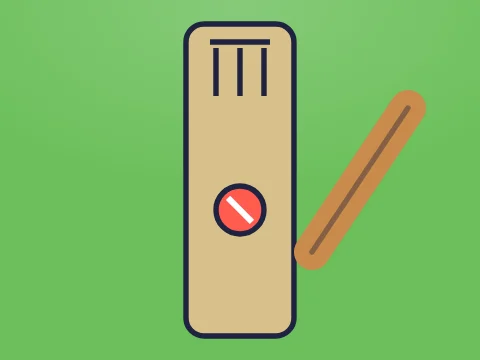
Phone flat between you. Each player owns a half, and the far half faces the far player.
- Bowler: one finger on your half. A dashed guide and a pace chip in km/h follow your drag; lift to bowl.
- Batter: tap the SWING button at the bottom of your half. The whole bottom strip of your half counts as the button.
- Sitting face to face, you both play at once, each in your own half. Only the first swing per ball counts, and a finger already resting on SWING before the ball is bowled doesn't swing.
- A timing bar on the batter's side shows a green zone and a moving cursor while the ball is in the air.
Options
Every option is free. Defaults are marked.
| Option | Choices | What it does |
|---|---|---|
| Timing bar | On (default)Off | Off hides the moving cursor and keeps only the green zone, so the ball itself is your timing cue. |
Play Cricket Duel against the bot
The bot both bowls and bats. As batter it knows the pace and line only once the ball is bowled, just as you do; as bowler it can't tell whether you'll swing. It doesn't change its approach in a chase, and it bowls under the same drift rule as a person.
Easy
Bowls slower and less often at the stumps, and taps noticeably early or late when it bats.
Normal
Usually times its swing into the good zone, varies its line, and now and then leaves a ball wide of the stumps.
Hard
Bowls quicker and more often at the stumps, slips in a slower ball after two fast ones, and times its swing closely, but never perfectly.
Online, tournaments and hints
- Online
- One phone onlyCricket Duel is a timing game: a few tenths of a second of internet delay would decide every swing, so it stays on one phone.
- Tournament
- Can be drawn in a tournamentA tournament game uses the default options, with the timing bar on, whatever your saved options, and who bats first alternates game by game.
- Hints
- No hints here: it's all about your own reactions.
Coming soon
- Overs option. Choose one, two or three overs per innings.
- Left-handed batting. A controls-side option that moves the SWING button to the left of the batter's half.
- Haptic timing cue. An optional buzz at the centre of the timing window, for players who find the cursor hard to follow.
How it feels
- A tone that rises with pace as the bowler drags, a whoosh on release and a tick that speeds up as the ball flies.
- A crisp bat crack and a crowd swell for a six, with a moment of slow motion and a sun-yellow “SIX!”.
- A stump rattle as the stumps scatter and tilt on “Bowled!”.
- Cartoon cricket only: no real teams, players, leagues or flags.
Accessibility
- Results are written out in banners such as “SIX!” and “Bowled!”, backed by sounds and the stumps, so colour is never the only cue.
- The SWING button is large and the whole bottom strip of the batter's half counts as it; bowling takes one finger.
- With reduced motion there is no slow motion, no particles and no ball trail, and banners fade in.
- A screen reader announces the balls, the score and the swing button, but the match itself is real-time and visual.
Cricket Duel questions
No. Level scores go to a super over, up to three of them, then fewer wickets lost, more sixes and finally a coin toss decide it.
Tap SWING with perfect timing, right as the ball reaches the bat. Good timing scores a four, and a slightly early or late swing edges two or one.
As the bowler, mix fast and slow balls at the stumps; as the batter, leave balls wide of the stumps and swing only at ones you can time.
Yes. Cricket Duel in Duo Clash is built for two players on the same phone. Phone flat between you. Each player owns a half, and the far half faces the far player.
Yes. The bot both bowls and bats. Choose Easy, Normal or Hard.
No. Cricket Duel is a timing game: a few tenths of a second of internet delay would decide every swing, so it stays on one phone.
Play Cricket Duel on one phone
Free on Android. Sit face to face, or take on the bot on Easy, Normal or Hard.