Feint Fencing
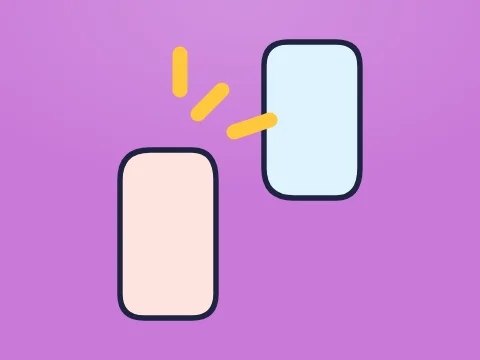
Hold to strike, tap to feint. Defend: tap the lane as the blade comes. First to 5.
Feint Fencing is a two-player duel where one player attacks and the other defends, then you swap. The attacker holds a pad to aim and lunge or taps to feint, and the defender must tap the right lane in time. First to 5 wins.
One of you attacks, one defends, then you swap. Hold a pad to aim your blade, twitch it with quick feints, slide to bluff, and let go to lunge; the defender has to read you and tap the right lane just in time.


- How you hold it
- Face-off
- Match
- First to 5
- Length
- About 1 minute
- Play
- Friend or bot
How to play Feint Fencing: quick rules
About 1 minute at first to 5. Full rules, options and bot levels are further down.
- 1Hold a pad to strike.
- 2A quick tap is a feint.
- 3Defend: tap the lane as the blade comes.
Feint Fencing rules
Setup and roles
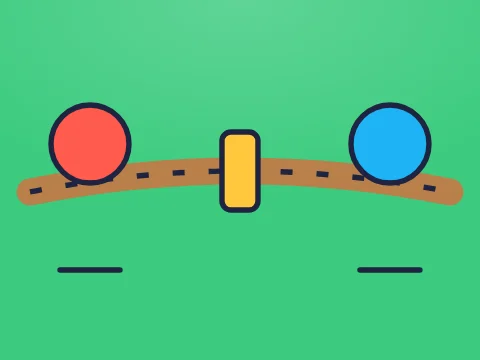
- The piste is split into 3 lanes (or 2 on the 2-lane setting). Each player has one pad per lane at their own end.
- Every point has one attacker and one defender. A coin toss picks the first attacker; on a rematch, the player who lost attacks first.
- Roles swap after every point. If both players are one point from winning, a fresh coin toss picks who attacks in the deciding point.
Attacking
- Hold a pad and your blade tip drifts to that lane. The defender can see this tell.
- Let go quickly and it's a feint: the blade twitches and comes back. You have 3 feints per attack; a fourth quick tap becomes a real strike.
- Hold a little longer, until the ring on your pad fills and turns yellow, then let go to strike in that lane.
- With Re-aim slide on, you can slide your held finger to another pad: the strike goes to the new lane while the tell stays on the first.
- A fuse burns from GO. If you haven't struck after 5 seconds, the blade strikes on its own.
Defending
- Tap a lane pad to raise a guard in that lane. It holds only a moment.
- After a guard your pads go grey while you recover, so guarding a feint can leave you open to the real strike.
- A strike takes a moment to travel down the lane, so you can react to it if you're watching.
Scoring
- Parry: a guard raised in the struck lane just before the blade lands scores for the defender. Very late, well-timed guards are a Perfect parry, still worth 1 point.
- Touch: any other strike (no guard, wrong lane, or a guard that already ran out) scores for the attacker.
- If the guard and the strike land at exactly the same moment, the defender wins the point.
- Every point has a scorer; there are no drawn points.
Pausing and winning
- Pausing mid-point cancels it and it's replayed with the same roles, unless a strike is already in flight: then the strike lands and is scored first.
- First to the target wins: 3, 5 or 7 points.
Lanes
- 3 lanes (Classic)
- The default, with more room to bluff.
- 2 lanes (Beginner)
- Wider pads and a simpler read, good for learning.
Tips to win at Feint Fencing
- 1Attacking, use your feints: a defender who guards a feint goes grey for a moment, and that is when your real strike lands.
- 2Use the Re-aim slide to bluff: hold one lane to show the tell, then slide to another before you let go.
- 3Don't wait out the fuse. After 5 seconds the blade strikes on its own and the defender knows it's coming.
- 4Defending, watch the blade travel down the lane rather than the tell; the strike takes a moment to arrive.
- 5Guard late rather than early: a guard and a strike at the same moment go to the defender.
Controls
Phone flat between you. Each player owns a half, and the far half faces the far player.
- Your pads sit in a row at your end, one under each lane: swords when you attack, shields when you defend.
- Attacker: touch down to start a hold, lift to release. Only one pad can be held at a time.
- Defender: a touch-down raises the guard; lifting does nothing.
- A finger already down at GO has to lift and touch again to count.
Options
Every option is free. Defaults are marked.
| Option | Choices | What it does |
|---|---|---|
| Points to win | 35 (default)7 | The score that wins the match. |
| Lanes | 2 (Kids)3 (Classic) (default) | How many lanes the piste has. |
| Re-aim slide (extra) | On (default)Off | Slide your held finger to another lane to bluff. |
| Speed up (extra) | OnOff (default) | Strikes travel a little faster with every point played. |
| Streak flame (extra) | On (default)Off | Three points in a row and your blade burns. Looks only. |
Play Feint Fencing against the bot
The bot plays Blue as both attacker and defender. It reads only what's on screen, the tell, the feint and the strike, and never knows your lane before you let go.
Easy
Attacks plainly with few feints, reacts slowly in defence and often bites on your tell.
Normal
Mixes in a feint or two, sometimes slides to bluff, and defends at a fair human pace.
Hard
Feints and bluffs more, attacks quickly and rarely bites on a tell. A patient attacker can still catch it out.
Online, tournaments and hints
- Online
- One phone onlyEvery parry depends on the defender reacting to the strike as it happens, so Feint Fencing stays on one phone.
- Tournament
- Can be drawn in a tournamentIn a tournament it is always first to 5 with 3 lanes, Re-aim slide and Streak flame on.
- Hints
- No hints here: it's all about your own reactions.
How it feels
- A soft steel slide as the blade drifts, a swish on a feint and a whoosh on the lunge.
- A clash and a shower of sparks on a parry, bigger on a Perfect parry.
- A thud and a hit flash on a touch.
- Haptics follow your phone's settings and the in-app vibration switch.
Accessibility
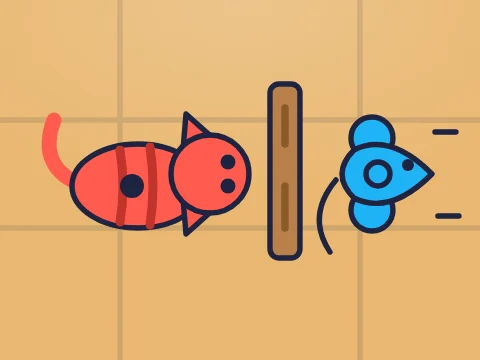
- Colour is never the only cue: Red's sash is solid and Blue's dotted, and pads show a sword or a shield for your role.
- One finger is enough for either role.
- 2 lanes, first to 3 and the Easy bot make a gentle start.
- With reduced motion on, shakes and bursts are dropped, but strikes still move so the timing reads.
Feint Fencing questions
The attacker holds a lane pad and lets go to strike, using quick taps as feints. The defender taps the right lane just as the blade arrives to parry. Roles swap every point and the first to 5 wins.
Yes. Lay the phone flat between you; each player uses the row of pads at their own end.
Yes. The bot attacks and defends on Easy, Normal or Hard, and it only reacts to what it sees on screen.
Skill. There's no chance in a point: it comes down to bluffing, reading your rival and reaction time. Only the first attacker is picked by coin toss.
Attacking, feint until the defender guards the wrong lane, then strike while their pads are grey. Defending, watch the blade travel down the lane and guard late.
No. Every parry depends on the defender reacting to the strike as it happens, so Feint Fencing stays on one phone.
Play Feint Fencing on one phone
Free on Android. Sit face to face, or take on the bot on Easy, Normal or Hard.